Some links below are affiliate links. If you buy through one, Viagem may earn a small commission at no extra cost to you, and we only recommend gear worth packing. See our affiliate disclosure.
How we scored these
Five scores, aimed at one question: does this bag survive a family trip and make the airport easier, or does it end up slung over your shoulder along with everything else. Capacity is what a child can actually fit for a week. Durability is whether it survives being dragged down stairs and sat on. Kid appeal is whether they want to pull it, which decides whether you end up carrying it. Maneuverability is how it rolls on carpet, the surface most airports are covered in. Value is what you get for the price.
The reviews in detail
Trunki Ride-On Suitcase
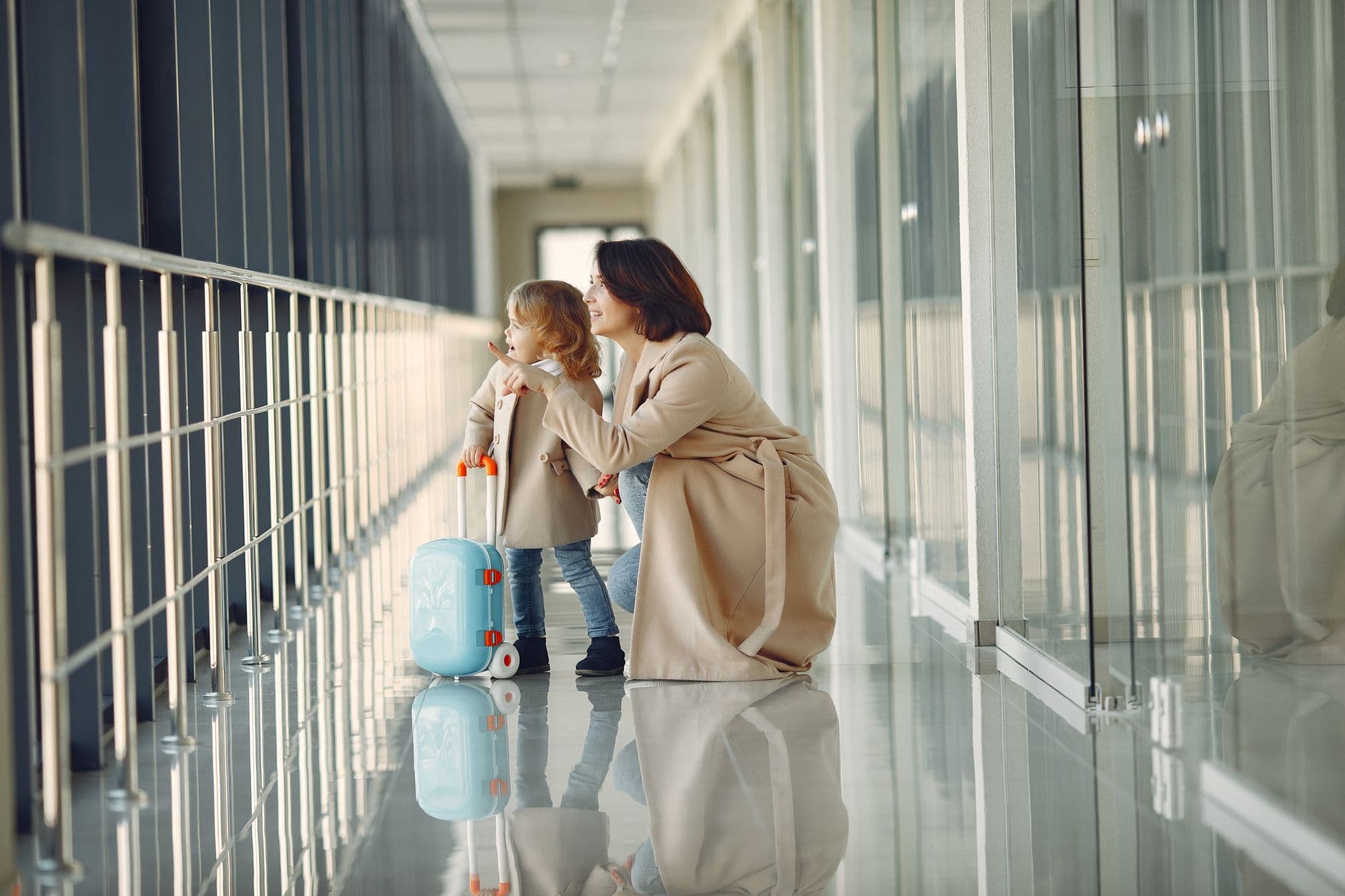
The original ride-on suitcase. A toddler sits on it and you tow them by the strap through the airport, then it holds their toys and snacks. Light, tough, and the thing that turns a terminal march into a game.
- Kids ride it through the terminal
- Light and durable
- Fun designs kids love
- Small capacity
- Outgrown by about 6
- Hard to ride on carpet
- Capacity
- ~18 L
- Age
- ~3-6
- Carry-on
- Usually yes
Stokke JetKids BedBox Ride-On
A ride-on suitcase that unfolds into a flat in-seat bed once you board, so a tired toddler can lie down on a long flight. Premium price, but it replaces both a ride-on bag and a separate plane bed.
- Rides through the terminal and becomes an in-seat bed
- Storage inside
- Replaces two products
- Expensive
- Most airlines allow it in window seats only, and some not at all
- Heavier than a Trunki
- Capacity
- ~12 L
- Age
- ~3-7
- Carry-on
- Yes
Kids Hardside Spinner Suitcase
Once a kid outgrows ride-on bags, a small hardside spinner is the upgrade: four wheels they can roll upright themselves, a clamshell that packs like a grown-up bag, and a shell that survives being dragged.
- Four-wheel spinner rolls easily for kids
- Durable hardshell
- Packs more than a ride-on
- No ride-on fun
- Can exceed carry-on size, check dimensions
- Heavier empty
- Capacity
- ~25-30 L
- Age
- ~6+
- Carry-on
- Check size
Kids Rolling Backpack Carry-On
A rolling backpack does double duty: wheel it through the airport, then wear it on the back for stairs and curbs. It also slides under the seat as the personal item, leaving the overhead bin for your bag.
- Rolls or wears on the back
- Fits under the seat as a personal item
- Doubles for school
- Wheels add weight
- Less rigid protection
- Small main compartment
- Capacity
- ~20 L
- Age
- ~5+
- Carry-on
- Personal item
Does kids' luggage count as a carry-on?
This trips families up because a small bag is not automatically a free bag. Airlines count pieces, not cuteness. A child on a paid seat normally gets the same allowance as an adult, which on most US carriers is one carry-on plus one personal item. A lap infant under two usually gets no allowance at all, so whatever you bring for them comes out of yours.
The number that matters is the standard US carry-on envelope of about 22 x 14 x 9 inches, and the under-seat personal item space, which is smaller and varies more by aircraft. Measured against that:
- Ride-on bags like the Trunki and the JetKids BedBox are well inside carry-on size. They usually count as the carry-on, not the personal item, because of their depth.
- A rolling backpack is the reliable personal item: it slides under the seat and leaves the overhead bin free for your bag. This is the combination that gets a family of four onboard without gate-checking anything.
- A kids hardside spinner is the one to measure. Sizes marketed for children range from genuinely small to nearly full carry-on, and the wheels and handle count toward the total.
- On a basic-economy fare, the carry-on allowance is often removed entirely, including for children. Check the fare rules, not just the airline.
The in-seat bed rule nobody mentions
The JetKids BedBox and similar in-seat beds are the best answer to an overnight flight with a three to six year old, and they are also the product most likely to be refused at the door. The reason is safety rather than fussiness: anything that fills the footwell can block the row during an evacuation.
- Most airlines that allow it allow it in window seats only, so the aisle stays clear.
- It generally cannot be used during taxi, takeoff, landing, or turbulence, which is exactly when a small child most wants to lie down.
- Several airlines do not permit it at all, and policies differ between an airline and its regional partners on the same ticket.
- Confirm with your specific airline before you buy one, and again before you fly. Buying it for a flight that will not allow it is the single most common way families waste money on this list.
How to choose kids' luggage
- Match it to age: ride-on bags for toddlers, spinners or rolling backpacks for big kids. Age is a better filter than price here.
- Weigh it empty. A bag that is heavy before anything goes in is a bag you will be carrying by the second gate.
- Four wheels beat two for a child. A spinner can be pushed upright alongside them; a two-wheel bag has to be tilted and towed, which small arms give up on.
- Let them carry their own plane entertainment, snacks, and one comfort item, and pack it together so they know what is inside. A child who knows where their own snacks are asks you for fewer things.
- Buy for the age they are, not the age they will be. A ride-on bag bought for a two-year-old gets three good years; bought for a five-year-old it gets one.
- Check that it can be identified across a baggage hall from thirty feet. Every black spinner looks the same, and a child who can spot their own bag is a child doing a job.
What to actually put in it
The point of a kid having a bag is not storage, it is ownership. Load it with the things they will ask for on the plane, so the answer to "where is my..." is "in your bag" rather than a search through the overhead bin at 35,000 feet.
- Their own headphones, already paired, plus a downloaded show. Airline entertainment fails often enough to plan around.
- Snacks they chose, in a container they can open themselves.
- One comfort item, and only one. Two is how you lose one.
- A change of clothes for them, and for anyone sitting next to them, on any flight with a child under about four.
- Nothing valuable and nothing sharp, because their bag will be opened at security by someone who is not you.
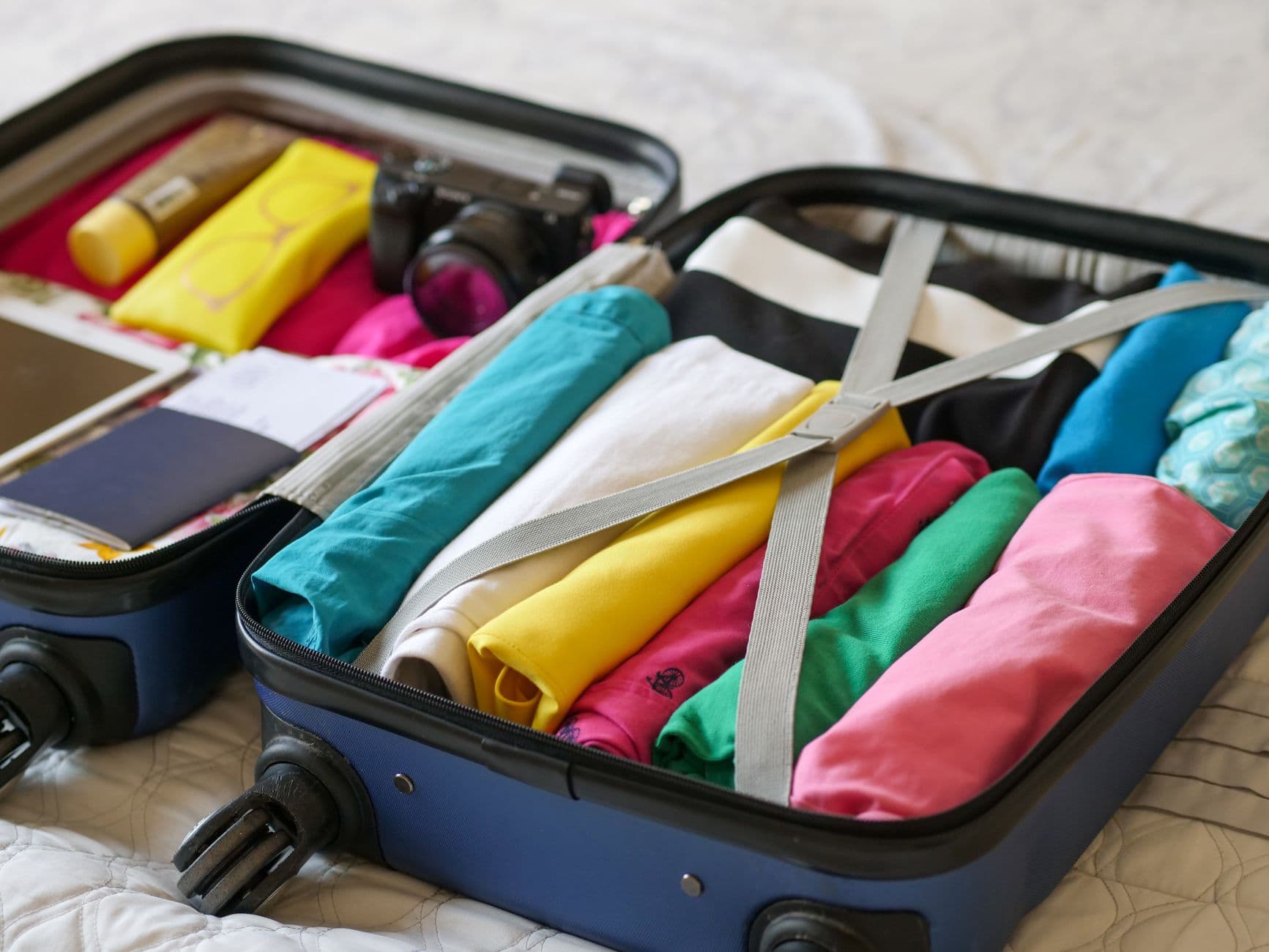
Cubes turn one shared suitcase into a bag per child, which ends most of the packing arguments.
Check price on AmazonVolume-limited and their own, so the tablet stops being a negotiation.
Check price on Amazon